


A split type single speed rear axle is a crucial component in many vehicles, especially in heavy - duty trucks and some specialized industrial vehicles. As a supplier of split type single speed rear axles, I have a deep understanding of both the advantages and disadvantages of this product. In this blog, I will focus on the disadvantages of a split type single speed rear axle.
1. Limited Speed and Torque Adaptability
One of the most significant drawbacks of a split type single speed rear axle is its limited speed and torque adaptability. Unlike multi - speed rear axles, a single speed rear axle has only one fixed gear ratio. This means that it cannot adjust to different driving conditions effectively.
In situations where a vehicle needs to climb a steep hill, a single speed rear axle may not provide enough torque. The fixed gear ratio might be set for normal driving conditions on flat roads. When faced with an incline, the engine may struggle to generate sufficient power to move the vehicle forward, leading to a significant reduction in speed and potentially overheating of the engine.

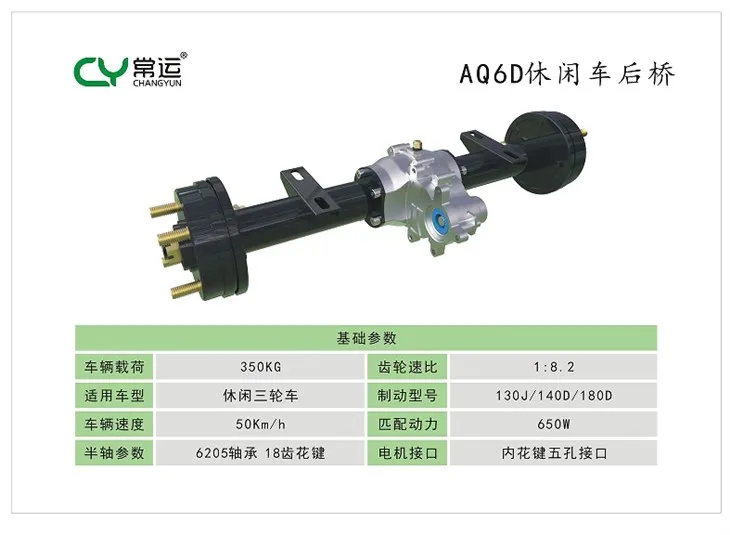
Conversely, on high - speed roads, the same single speed rear axle may cause the engine to run at a higher RPM than necessary. This not only increases fuel consumption but also puts more stress on the engine and other components of the vehicle. For example, if a vehicle with a single speed rear axle is designed for off - road use with a relatively low - speed gear ratio, when it is driven on a highway, the engine will be running at a much higher speed than optimal, resulting in inefficient fuel usage and increased wear and tear.
2. Lack of Flexibility in Different Driving Environments
The split type single speed rear axle lacks the flexibility required for different driving environments. Different terrains and driving scenarios demand different gear ratios. For instance, in urban driving, stop - and - go traffic requires a gear ratio that allows for quick acceleration and deceleration. A single speed rear axle may not be able to provide the appropriate power delivery for such conditions.
In off - road situations, such as muddy or rocky terrains, a lower gear ratio is needed to provide more torque and better traction. A single speed rear axle with a gear ratio optimized for normal roads will struggle to perform well in these challenging environments. This lack of flexibility can limit the vehicle's usability and performance in various driving conditions, making it less versatile compared to vehicles with multi - speed rear axles.
3. Higher Maintenance Requirements
Another disadvantage of a split type single speed rear axle is its higher maintenance requirements. Due to the fixed gear ratio, the axle is often subjected to more stress in certain driving conditions. For example, when the vehicle is under heavy load or climbing a steep hill, the single speed rear axle has to transfer a large amount of torque through the same gear set continuously.
This continuous stress can lead to increased wear and tear on the gears, bearings, and other components of the rear axle. As a result, the frequency of maintenance and replacement of parts is higher compared to multi - speed rear axles. Regular maintenance, such as lubrication, gear inspection, and bearing replacement, is essential to ensure the proper functioning of the rear axle. Failure to perform timely maintenance can lead to more serious problems, such as gear breakage or bearing failure, which can be costly to repair.
4. Reduced Fuel Efficiency
As mentioned earlier, the single speed rear axle can lead to reduced fuel efficiency. Since it has a fixed gear ratio, the engine may not be operating at its most efficient RPM range under different driving conditions. In city driving, the engine may be running at a higher RPM than necessary during low - speed maneuvers, consuming more fuel. On the highway, if the gear ratio is not optimized for high - speed driving, the engine will also consume more fuel to maintain the desired speed.
Compared to multi - speed rear axles, which can adjust the gear ratio according to the driving conditions, a single speed rear axle cannot take advantage of the engine's optimal power and fuel consumption characteristics. This inefficiency in fuel usage can significantly increase the operating costs of the vehicle over time.
5. Limited Compatibility with Modern Vehicle Systems
In today's automotive industry, modern vehicles are equipped with advanced electronic control systems, such as traction control, anti - lock braking systems (ABS), and electronic stability control (ESC). These systems rely on the ability to adjust the power distribution and braking force to different wheels based on the driving conditions.
A split type single speed rear axle may have limited compatibility with these modern vehicle systems. The fixed gear ratio makes it difficult to integrate with the electronic control systems effectively. For example, in a traction control system, the ability to adjust the power to the wheels is crucial to prevent wheel slippage. A single speed rear axle may not be able to provide the necessary flexibility to work in harmony with such systems, reducing the overall safety and performance of the vehicle.
Conclusion
Although split type single speed rear axles have their own advantages, such as simplicity and lower initial cost, they also come with several significant disadvantages. These include limited speed and torque adaptability, lack of flexibility in different driving environments, higher maintenance requirements, reduced fuel efficiency, and limited compatibility with modern vehicle systems.
However, for some specific applications where the driving conditions are relatively stable and the vehicle does not require a wide range of speed and torque adjustments, a split type single speed rear axle can still be a viable option.
If you are considering purchasing a split type single speed rear axle, I recommend carefully evaluating your specific needs and driving conditions. We offer high - quality split type single speed rear axles, such as the Single Gear Split Rear Axle AQ6 and Single Gear Split Rear Axle AQ8. If you have any questions or are interested in purchasing, please feel free to contact us for more information and to discuss your requirements.
References
- Automotive Axle Design and Technology Handbook
- Vehicle Dynamics and Control by Rajesh Rajamani


