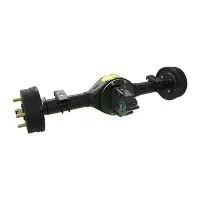

The function of the automotive chassis system is to support and mount the engine and other components and assemblies, forming the overall shape of the vehicle, receiving power from the engine to enable the vehicle's movement, and ensuring normal driving.
The automotive chassis consists of four parts: the transmission system, the running system, the steering system, and the braking system. The chassis's function is to support and mount the engine and its various components and assemblies, forming the overall shape of the vehicle, receiving power from the engine to enable the vehicle's movement, and ensuring normal driving.
The transmission system is the power transmission device between the automotive engine and the drive wheels. It should ensure that the vehicle has the necessary traction and speed under various driving conditions, and ensure the coordinated change between traction and speed, giving the vehicle good power and fuel economy. It should also ensure that the vehicle can reverse, that the left and right drive wheels can adapt to differential requirements, and that power transmission can be smoothly engaged or completely and quickly disengaged as needed.