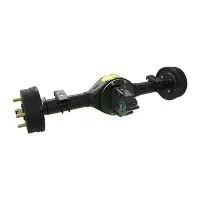

The solid feel is very noticeable. Because cars with independent suspension have their wheels independently connected to the body, when one wheel experiences an impact or vibration, the elastic elements absorb the force, preventing it from affecting the other wheel. This allows manufacturers to achieve a balanced configuration of ride comfort, stability, and handling stability during the initial design phase. Generally, cars with independent suspension offer significantly better handling and comfort than those with non-independent suspension.
The suspension elastically connects the chassis and wheels, affecting various aspects of a car's performance and making it one of the three most important assemblies (the other two being the engine and transmission). Structurally, a car suspension consists of simple components like rods, cylinders, and springs, but it's a very challenging assembly to meet. This is because the suspension must satisfy both the requirements for handling stability and comfort, which are inherently contradictory. To achieve good comfort, it's necessary to significantly dampen car vibrations, requiring softer springs. However, softer springs can easily cause the car to nose-dive during braking, nose-jump during acceleration, and exhibit severe body roll, hindering steering and leading to instability.
While the components of a suspension system are simple, determining their parameters is quite complex. Manufacturers must consider not only comfort and handling stability but also cost. Different manufacturers have different strategies based on these three factors, resulting in five common suspension types in China: MacPherson strut independent suspension, double wishbone independent suspension, single trailing arm torsion beam semi-independent suspension, multi-link independent suspension, and multi-link independent suspension.